Skip to content
Skip to product information
Description

Capture Breathtaking Astrophotography with Player One Ceres-M Mono Camera

Elevate your astrophotography game with Player One's Ceres-M Mono Camera. Designed for the discerning astrophotographer, this monochrome marvel delivers exceptional image quality and sensitivity, allowing you to capture breathtaking images of the cosmos with stunning clarity and detail.

Unleash Your Creativity with Player One's Ceres-M Mono Camera

Unleash your creativity and explore the depths of the universe with Player One's Ceres-M Mono Camera. With its high sensitivity and monochrome sensor, this camera offers unparalleled versatility for capturing astrophotography images that showcase the wonders of the night sky in exquisite detail. Whether you're a seasoned astrophotographer or a beginner, the Ceres-M camera empowers you to express your artistic vision and push the boundaries of what's possible in astrophotography.

Capture the Beauty of the Cosmos in Monochrome with Player One's Ceres-M Mono Camera

Experience the mesmerizing beauty of the universe in monochrome with Player One's Ceres-M Mono Camera. This camera's exceptional image quality and sensitivity allow you to capture the intricate details of celestial objects with stunning clarity and contrast. From capturing the subtle shades of nebulae to revealing the delicate features of planets and star clusters, the Ceres-M camera empowers you to capture the raw beauty of the cosmos in monochrome, unleashing your creative potential like never before.


Player One Guiding Series comparison featuring Ceres-M, Sedna-M, and Xena-M astronomy cameras with specifications and sensor details on a dark background.

Player One Astronomy guiding camera series, AKA Dwarf Planet Series, is design for guiding and imaging. This series including 3 sub-series, Ceres, Sedna and Xena.

Comparison chart of Player One Guiding Series sensor sizes showing AR0130, IMX224, IMX178, and IMX249 sensors used in Ceres-M, Ceres-C, Sedna-M, and Xena-M astronomy cameras on a dark background.

Product Description

Technical specifications of the Player One Ceres-M Mono Camera showing sensor details, performance metrics, and connection ports on a dark background.


Ceres-M is a guiding camera developed by Player One Astronomy, which adopts the Aptina AR0130 1/3” format sensor. The 3.75um pixel size accommodates a well depth of 18ke with a total of 1.2MP  (the resolution is 1280*960), and the diagonal is 6mm.


Highlights

Dwarf planet series integrated USB3.0 data port(500Mb/s), which can provide over 10 times speed than USB2.0 device(60Mb/s). Whatever you wants to do guiding or imaging, this camera series can handle it very well.

Dwarf planet camera diameter is 1.25″, it can slide in 1.25″ holder of guiding scope, makes the whole setup shorter.

Player One Ceres-M mono astronomy camera attached to a small telescope with red and black rings on a white background, ideal for guiding or planetary imaging setups.


With a 5-100MM CS lens attached on the camera, it also can be used as a guider or finder.

Player One Ceres-M mono astronomy camera connected to a 100mm lens with mounting bracket and fine adjustment screws on a white background, designed for astrophotography and guiding.


Features:

Player One Ceres-M Mono Camera with key features highlighted, including AR0130 monochrome sensor, USB 3.0 connectivity, DPS technology, ST4 port, and lightweight 1.25-inch design on a black background.


The naming of Player One guiding cameras is interesting. Guiding camera is smaller than planetary camera, that’s why we choose dwarf planets to name it.

The size of each dwarf planet to a certain extent represents the size of camera sensors. We will name Ceres with a 1/3″ sensor camera, and for Xena, we will name it with a 1/1.2 inch sensor camera. All names will be engraved on the housing of the cameras.


Cutting-edge Design

The guiding cameras developed by Player One Astronomy uses technological regular hexagon to construct the main body line.

Player One Ceres-M Mono Camera in red housing with AR0130 sensor and 1.2MP resolution, shown on transparent background.

DPS technology

The guiding cameras from Player One Astronomy have DPS (Dead Pixel Suppression) technology. The DPS is anaylse many dark frames to find out thoes fixed abnormal pixel and record the map in camera memory. In imaging, each exposure frames, thoes position of dead pixels will be given a median value according to the active pixels around that abnormal pixel.

Comparison showing Player One Ceres-M Mono Camera images with and without DPS technology, demonstrating reduced sensor noise and cleaner image quality.


Overvoltage and overcurrent protection mechanism

Player One cameras produced by the number one player ensures the safety of your camera and other equipment through overvoltage and overcurrent protection mechanisms.

Data Port

When the camera is connected to the USB3.0 interface and full-resolution preview is used, it can reach 65 FPS in RAW8 mode (10bit ADC). When recording images, since the actual writing speed will be affected by the writing speed of the hard disk itself, when the hard disk writing speed is slow, the recording may not reach the theoretical speed. It is recommended that you use a high-quality solid state drive to record data to give full play to the performance of the camera.

Use the ST4 guide cable to connect the camera and the AUTO GUIDE port of the equatorial mount to do guiding.

Rear view of the Player One Ceres-M Mono Camera showing labeled USB 3.0 data port and ST4 guiding port on a white background.


Performance


Performance charts for Player One Ceres-M Mono Camera showing system gain, readout noise, full well capacity, and dynamic range versus gain settings on a white background.


Readout Noise

Regarding readout noise, we solemnly promise that all values are obtained from actual tests.  And for users, you could use Sharpcap 4 for testing. SC4 has a function called Sensor Analysis, provide a very simple way to test readout noise.

After many rigorous readout noise tests, the Ceres-M camera can reach a low readout noise of 3.6e at a gain of 200.

If you are interested in readout noise testing, you may try it yourself, which is very simple.

QE Curve

Quantum efficiency graph of the Aptina AR0130CS sensor used in the Player One Ceres-M Mono Camera, showing spectral response curve across different wavelengths.


Mechanical Drawing

Technical drawing of the Player One Ceres-M Mono Camera showing back focus length, sensor position, 1.25-inch diameter, and M28.5x0.6 thread dimensions.

Package contents of the Player One Ceres-M Mono Camera showing camera, USB 3.0 cable, ST4 cable, 1.25-inch extender, 1.25-inch cover, and air blower on a white background.

Frequently Asked Questions (FAQ)

Is the Player One Ceres-M good for planetary imaging?

Yes. With its sensitive monochrome Aptina AR0130 sensor and fast USB 3.0 transfer, the Ceres-M excels for high-contrast planetary and Lunar imaging.

What sensor does the Ceres-M use?

The Ceres-M uses the Aptina AR0130 1/3″ monochrome CMOS sensor with 3.75 µm pixels, ~1.2 MP (1280×960) resolution and a ~6 mm diagonal.

How fast is the camera?

When connected via USB 3.0, the Ceres-M can reach up to ~65 FPS in RAW8 mode (10-bit ADC), depending on capture settings and drive speed.

Can I use the Ceres-M for guiding?

Absolutely. It includes an ST4 guiding port and works with popular guiding software such as PHD2 and N.I.N.A.

What software is compatible?

The camera works with SharpCap, FireCapture, N.I.N.A., and most ASCOM/native-driver applications.

Does it need external power?

No external power is required — the Ceres-M is USB-powered via the USB 3.0 port.

Tags: Player One Ceres-M Mono Camera, Player One Ceres-M, Ceres-M guiding camera, monochrome astronomy camera, Aptina AR0130, USB 3.0 astronomy camera, ST4 guiding camera, planetary imaging camera, lunar imaging camera, astrophotography camera UK, Player One Astronomy, Dwarf Planet Series, mono CMOS camera, telescope guide camera, Dark Clear Skies UK
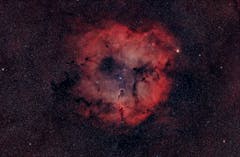

Player One Ceres-M Mono Planetary Camera (AR0130)

Sale price £121.00
Regular price £135.00You saved£14.00 OFF

ceres-m

Specifications

Capture Breathtaking Astrophotography with Player One Ceres-M Mono Camera

Elevate your astrophotography game with Player One's Ceres-M Mono Camera. Designed for the discerning astrophotographer, this monochrome marvel delivers exceptional image quality and sensitivity, allowing you to capture breathtaking images of the cosmos with stunning clarity and detail.

Unleash Your Creativity with Player One's Ceres-M Mono Camera

Unleash your creativity and explore the depths of the universe with Player One's Ceres-M Mono Camera. With its high sensitivity and monochrome sensor, this camera offers unparalleled versatility for capturing astrophotography images that showcase the wonders of the night sky in exquisite detail. Whether you're a seasoned astrophotographer or a beginner, the Ceres-M camera empowers you to express your artistic vision and push the boundaries of what's possible in astrophotography.

Capture the Beauty of the Cosmos in Monochrome with Player One's Ceres-M Mono Camera

Experience the mesmerizing beauty of the universe in monochrome with Player One's Ceres-M Mono Camera. This camera's exceptional image quality and sensitivity allow you to capture the intricate details of celestial objects with stunning clarity and contrast. From capturing the subtle shades of nebulae to revealing the delicate features of planets and star clusters, the Ceres-M camera empowers you to capture the raw beauty of the cosmos in monochrome, unleashing your creative potential like never before.


Player One Guiding Series comparison featuring Ceres-M, Sedna-M, and Xena-M astronomy cameras with specifications and sensor details on a dark background.

Player One Astronomy guiding camera series, AKA Dwarf Planet Series, is design for guiding and imaging. This series including 3 sub-series, Ceres, Sedna and Xena.

Comparison chart of Player One Guiding Series sensor sizes showing AR0130, IMX224, IMX178, and IMX249 sensors used in Ceres-M, Ceres-C, Sedna-M, and Xena-M astronomy cameras on a dark background.

Product Description

Technical specifications of the Player One Ceres-M Mono Camera showing sensor details, performance metrics, and connection ports on a dark background.


Ceres-M is a guiding camera developed by Player One Astronomy, which adopts the Aptina AR0130 1/3” format sensor. The 3.75um pixel size accommodates a well depth of 18ke with a total of 1.2MP  (the resolution is 1280*960), and the diagonal is 6mm.


Highlights

Dwarf planet series integrated USB3.0 data port(500Mb/s), which can provide over 10 times speed than USB2.0 device(60Mb/s). Whatever you wants to do guiding or imaging, this camera series can handle it very well.

Dwarf planet camera diameter is 1.25″, it can slide in 1.25″ holder of guiding scope, makes the whole setup shorter.

Player One Ceres-M mono astronomy camera attached to a small telescope with red and black rings on a white background, ideal for guiding or planetary imaging setups.


With a 5-100MM CS lens attached on the camera, it also can be used as a guider or finder.

Player One Ceres-M mono astronomy camera connected to a 100mm lens with mounting bracket and fine adjustment screws on a white background, designed for astrophotography and guiding.


Features:

Player One Ceres-M Mono Camera with key features highlighted, including AR0130 monochrome sensor, USB 3.0 connectivity, DPS technology, ST4 port, and lightweight 1.25-inch design on a black background.


The naming of Player One guiding cameras is interesting. Guiding camera is smaller than planetary camera, that’s why we choose dwarf planets to name it.

The size of each dwarf planet to a certain extent represents the size of camera sensors. We will name Ceres with a 1/3″ sensor camera, and for Xena, we will name it with a 1/1.2 inch sensor camera. All names will be engraved on the housing of the cameras.


Cutting-edge Design

The guiding cameras developed by Player One Astronomy uses technological regular hexagon to construct the main body line.

Player One Ceres-M Mono Camera in red housing with AR0130 sensor and 1.2MP resolution, shown on transparent background.

DPS technology

The guiding cameras from Player One Astronomy have DPS (Dead Pixel Suppression) technology. The DPS is anaylse many dark frames to find out thoes fixed abnormal pixel and record the map in camera memory. In imaging, each exposure frames, thoes position of dead pixels will be given a median value according to the active pixels around that abnormal pixel.

Comparison showing Player One Ceres-M Mono Camera images with and without DPS technology, demonstrating reduced sensor noise and cleaner image quality.


Overvoltage and overcurrent protection mechanism

Player One cameras produced by the number one player ensures the safety of your camera and other equipment through overvoltage and overcurrent protection mechanisms.

Data Port

When the camera is connected to the USB3.0 interface and full-resolution preview is used, it can reach 65 FPS in RAW8 mode (10bit ADC). When recording images, since the actual writing speed will be affected by the writing speed of the hard disk itself, when the hard disk writing speed is slow, the recording may not reach the theoretical speed. It is recommended that you use a high-quality solid state drive to record data to give full play to the performance of the camera.

Use the ST4 guide cable to connect the camera and the AUTO GUIDE port of the equatorial mount to do guiding.

Rear view of the Player One Ceres-M Mono Camera showing labeled USB 3.0 data port and ST4 guiding port on a white background.


Performance


Performance charts for Player One Ceres-M Mono Camera showing system gain, readout noise, full well capacity, and dynamic range versus gain settings on a white background.


Readout Noise

Regarding readout noise, we solemnly promise that all values are obtained from actual tests.  And for users, you could use Sharpcap 4 for testing. SC4 has a function called Sensor Analysis, provide a very simple way to test readout noise.

After many rigorous readout noise tests, the Ceres-M camera can reach a low readout noise of 3.6e at a gain of 200.

If you are interested in readout noise testing, you may try it yourself, which is very simple.

QE Curve

Quantum efficiency graph of the Aptina AR0130CS sensor used in the Player One Ceres-M Mono Camera, showing spectral response curve across different wavelengths.


Mechanical Drawing

Technical drawing of the Player One Ceres-M Mono Camera showing back focus length, sensor position, 1.25-inch diameter, and M28.5x0.6 thread dimensions.

Package contents of the Player One Ceres-M Mono Camera showing camera, USB 3.0 cable, ST4 cable, 1.25-inch extender, 1.25-inch cover, and air blower on a white background.

Frequently Asked Questions (FAQ)

Is the Player One Ceres-M good for planetary imaging?

Yes. With its sensitive monochrome Aptina AR0130 sensor and fast USB 3.0 transfer, the Ceres-M excels for high-contrast planetary and Lunar imaging.

What sensor does the Ceres-M use?

The Ceres-M uses the Aptina AR0130 1/3″ monochrome CMOS sensor with 3.75 µm pixels, ~1.2 MP (1280×960) resolution and a ~6 mm diagonal.

How fast is the camera?

When connected via USB 3.0, the Ceres-M can reach up to ~65 FPS in RAW8 mode (10-bit ADC), depending on capture settings and drive speed.

Can I use the Ceres-M for guiding?

Absolutely. It includes an ST4 guiding port and works with popular guiding software such as PHD2 and N.I.N.A.

What software is compatible?

The camera works with SharpCap, FireCapture, N.I.N.A., and most ASCOM/native-driver applications.

Does it need external power?

No external power is required — the Ceres-M is USB-powered via the USB 3.0 port.

Tags: Player One Ceres-M Mono Camera, Player One Ceres-M, Ceres-M guiding camera, monochrome astronomy camera, Aptina AR0130, USB 3.0 astronomy camera, ST4 guiding camera, planetary imaging camera, lunar imaging camera, astrophotography camera UK, Player One Astronomy, Dwarf Planet Series, mono CMOS camera, telescope guide camera, Dark Clear Skies UK

Player One Ceres-M Mono Camera
Player One Ceres-M Mono Planetary Camera (AR0130)
Drawer Title
Similar Products